A Solitary Swan

Last month, we travelled to Stratford, Ontario for the day. Like Stratford in England, the town is on a river called the Avon.  Although the main attraction in town is theatre – primarily Shakespeare – the village has  a few other things to recommend it.

There is a walkway on both sides of the water in the Avon River Park. Small bridges and islands add to the picturesque setting, which is also sprinkled with memorial benches and wildflowers.

Along the water there are lots of water birds – seagulls, several breeds of ducks, geese, and swans. As I wandered near a little cove, a solitary swan put on a lovely display for me.

This slideshow requires JavaScript.

A lovely way to finish our day before dinner!

_________________________________________________

This post was written in response to the Weekly Photo Challenge on WordPress.com’s Daily Post. This week’s challenge topic is Solitary. To learn more about the challenge and to see the solitary images posted by other bloggers, click here.

Posted in Photo Challenges | Tagged , , , , , , , , | 18 Comments

Lessons in Seeking Change – A Look Back at the Occupy Movement

I don’t usually tackle economic or political subjects, but WordPress has presented an interesting topic this week, so I’m giving this one-woman’s-take-on-events a try. Did you know that the Occupy Wall Street protests celebrated their anniversary on September 17th?

Remember the Occupy Movement?

At first, I got it. People were outraged that apparently Wall Street insiders got rich by being careless of their clients, careless of the long-term implications of their dealings, careless of any particular moral imperatives. We go to our financial advisors much as we go to attorneys or accountants when we need them. There’s a lot of trust involved, and undoubtedly some trusts were violated. There’s a growing wealth gap – the rich got richer, and… well, you know.

I’m absolutely not against peaceful protests or demonstrations. I’m a child of the 196os, and I both understand and appreciate the difference well-orchestrated voices can make. The difficulty I have with the Occupy movement is that it has failed to find its common voice. It has been unable to communicate cohesive demands or goals, at least to me. It doesn’t even always seem to know who/what the target of its anger is.

It’s not enough to be angry that wealthy people are powerful people. In a free-market economy, in fact in most cultures, that’s the case. It occurs to me that one problem confronting Occupy is that there is no single “bad guy” in what happened to the economy. Some people got greedy, and many others turned a blind eye to what they were doing.

In the US, some of the villains were Republicans, and some were Democrats. Some were stock brokers; some were bankers. And some were union or other pension fund managers and regulators elected or appointed to make sure that trades, loans, and mortgages (and the publicly traded firms which offer them) were properly developed and managed.

And the investing public didn’t always take responsibility or do its due diligence either. Investors and their advisors ignored those simple maxims: “Let the buyer beware” and “If it seems to good to be true, it is.”  After all, didn’t they have to buy in for “Wall Street” to succeed?

When things started to fall apart, even those who hadn’t invested in iffy transactions got hurt, because the stock market took our traditional investments, IRAs, 401ks, and pension plans, down a few notches, too. Companies suffered; more jobs were lost. We all became unhappy, regulators stirred from their reveries, and some people were moved to demonstration… hence Occupy Wall Street.

The idea caught on like wildfire – people suffering from the wealth gap across the US and around the world jumped on the idea, and individual encampments popped up everywhere. But they appeared, at least to those outside the movement, disconnected and diverse.  No clear leadership stepped up and grabbed our attention, and the message was diluted.

In the sixties, non-violent demonstrations helped break down color barriers in the US, and also saw an end to our involvement in the armed conflict in Vietnam. Everyone still remembers the well-organized March on Washington, and Martin Luther King’s dream. There were persuasive leaders, unity, and achievable goals in those protests (and others), that Occupy seems to lack.

On its anniversary, absent a cohesive voice and concrete proposals, Occupy has fizzled, but not died. The encampments, which had taken over public parks and become eyesores, expenses, and annoyances to the people they were trying to influence, have mostly been disbanded by local authorities. Regulators seem to be snoozing again, after slapping a few hands. The American people and media have moved on to the upcoming elections, where they feel they can have some power over our economic future.

And what have we learned?

Well, I suppose that outrage and righteous indignation alone aren’t enough to create lasting change. Nor are protests. Nor even being right. To make change, unifying, clear solutions must be presented – objectives that people can get behind. Being inclusive, as Occupy strives to be, is lovely – but the message of any organization hoping have an impact needs to be refined and focused.  A clear voice has to rise, and the goals must be offered in a way everyone can understand and grasp. I believe that’s what builds true momentum behind a cause.

The wealth gap concerns us all, whether we realize it or not. The economy affects us all. I certainly get that. It’s not that I necessarily disagree with the Occupy movement. It’s just that I never understood their plan.

And for me, there has to be a plan.

_______________________________________________________

This post was written in response to the WordPress Weekly Writing Challenge: Mind the Gap-The Occupy Wall Street Movement. To read more about the challenge and other bloggers’ responses, click here.

Posted in Finances, Ruminations, Writing Challenges | Tagged , , , , , | 19 Comments

Peaceful White

I unfortunately wasn’t home on Friday to do a “white” post in honor of the UN’s International Day of Peace. I know I’m late for the day, and early for the season, but there is nothing more quietly peaceful to me than snow. I realize that winter is a depressing time for many people. I myself tend to wish it away. Still, there is something magical in the way that snow transforms the world.

My beloved and I live, more or less, right in the woods. When our winter snows come, they fall silently, blanketing everything, even our trees, with layers of pure white. The serenity, as we look out our windows at a wonderland of downy white snow and crystal ice, is lovely.

This slideshow requires JavaScript.

Of course, the peace doesn’t last. In no time, plows are moving snow aside on our driveway and roads. Human (and animal) footprints mar the perfect surface. Wind, sun, rain all work on the peaceful scene, and once again we see the imperfections in our lawn, the realities of our world.

Winter days are short. Here’s to a more lasting peace.

A Winter Eden by Robert Frost

A winter garden in an alder swamp,
Where conies now come out to sun and romp,
As near a paradise as it can be
And not melt snow or start a dormant tree.

It lifts existence on a plane of snow
One level higher than the earth below,
One level nearer heaven overhead,
And last year’s berries shining scarlet red.

It lifts a gaunt luxuriating beast
Where he can stretch and hold his highest feat
On some wild apple tree’s young tender bark,
What well may prove the year’s high girdle mark.

So near to paradise all pairing ends:
Here loveless birds now flock as winter friends,
Content with bud-inspecting. They presume
To say which buds are leaf and which are bloom.

A feather-hammer gives a double knock.
This Eden day is done at two o’clock.
An hour of winter day might seem too short
To make it worth life’s while to wake and sport.

_________________________________________________

This post was written in response to a Travel Theme challenge from Ailsa at wheresmybackpack. This week’s theme is White, in honor of the UN’s International Day of Peace.  To learn more about the challenge and see the peaceful posts from other bloggersclick here.

Posted in Photo Challenges | Tagged , , , , , | 32 Comments

Leading a Textured Life

What textures make up the substance of your life? Do you prefer a smooth, simple, serene tempo, or do you enjoy a more varied, unpredictable, mixed up energy in your days?  Merriam-Webster has many definitions of texture. My favorites are: something composed of closely interwoven elements; the disposition or manner of union of the particles of a body or substance; identifying quality : character.

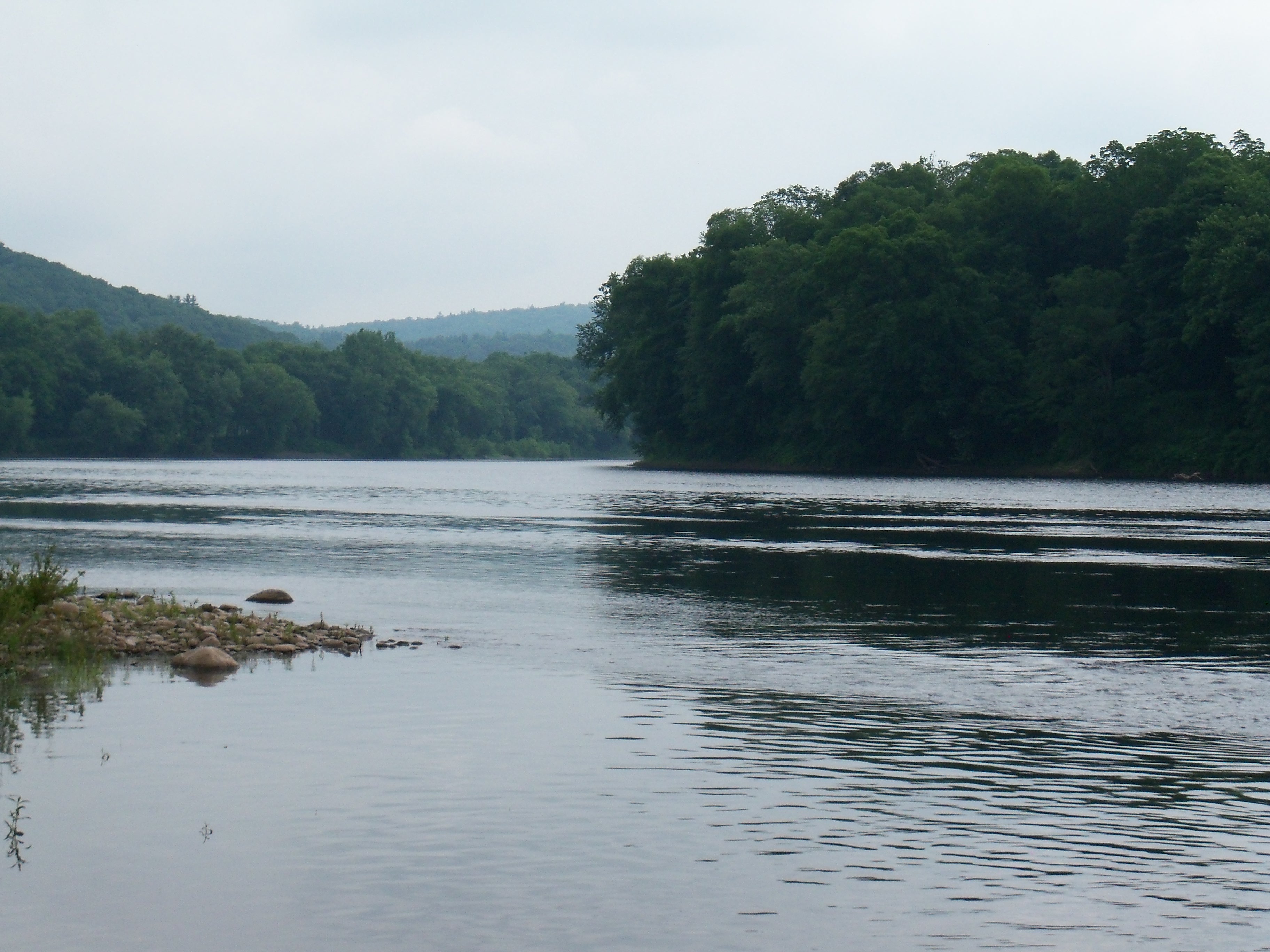
When my beloved and I are kayaking on a clear day, the surface texture of the water provides a wealth of patterns and mosaics – all signs of the character of the upcoming journey. Some areas will look as clear as glass, even on a moving river. Other areas will be less settled and even. Sometimes that’s because of plants growing up to the surface, or recent activity by animals – maybe fish, frogs, turtles, snakes, insects or water birds. It could be that a wind is blowing, disturbing the surface. In some places, it’s a portent of tidal waters pushing against the flow of the river, signaling a harder paddle ahead. Or, more ominously, a disturbance could mean hidden rock formations just below, creating a constant pattern on the surface above. When the rocks are at or above the surface, they may form narrow channels,  or rapids.

An experienced paddler learns to read a river – to see the happy signs of possible wildlife sightings in the water, to paddle into waves rather than being broadsided by them, to skirt the shallow and rocky areas, and to ride the rapids without capsizing. The more we paddle, the better we become at reading both the surface of the water and what lies beneath, allowing us to act accordingly.

The older we get, the better we become at reading life. We learn that sometimes it’s best to identify and face issues head-on, and not to be broadsided trying to evade them. Sometimes we can keep the waters around us calmer by exercising discretion and choosing kindness. Do we roil the waters, or try to leave them undisturbed? We can’t always avoid coming turbulence, but with a little warning and practice we learn to navigate through, and be wiser on the other side. We can also learn to spot some wonderful opportunities along the way.

Every life hits some waves or rapids (and some smooth patches), sooner or later. And every traveler leaves his own wake and textures in the water. No life would be complete without somehow joining and adding to its surface and underlying textures. Each of us deepens the colors, sounds, and appearance of our surrounding world, and we are each a part of the fabric of our universe. A life without textures would be dull and uninteresting, and we should choose carefully the colors and character we add.

We can’t control what lies ahead, but how we manage the hazards and possibilities in the textures of our days is what defines us.  Paddle through with care.

_________________________________________

This post was written in response to a Travel Theme challenge from Ailsa at wheresmybackpack. This week’s theme is Texture.  To learn more about the challenge and see what textured responses other bloggers submittedclick here.


Posted in Photo Challenges | Tagged , , , , , | 28 Comments

Instant Connections and Communications – Taking the Good with the Bad

May you live in interesting times

As I sat in my 6th grade classroom, making every appearance of listening to the Social Studies lesson of the day, my peripheral vision caught a folded piece of notebook paper making a dangerous journey forward from the rear right corner of the room. As the teacher looked down at her book, or turned to use the blackboard, a student might tap the person ahead and hand the paper up, or slide it carefully onto the desk at the left. At last the paper reached its intended recipient, whose name was block printed on one of the exposed sides. Her task was to open it, near the front of the classroom, without attracting the notice of the teacher. The message had to reach her during class, or she would pass into the halls and on to her next class without the urgent information in the note.

By ninth grade, I regularly carried messages (usually just verbal) from a friend in my gym class, to her boyfriend in my English class. When we went on high school or scouting field trips, we were given regular hourly intervals at which each meandering group would “meet back” with the rest at a common point to allow the group leaders to count heads. If we went out from home and were late returning, our parents worried and called around to our friends’ homes to find out where we were last spotted. (We were always scolded for not calling in on these occasions, as well.)

Now, all of these things are handled using cell phones which can text, tweet, or email, in addition to just outright calling another person, to make sure no important communication is missed. We indeed live in interesting times.

Now, in fact, electronic communication is so pervasive that we are seeking ways to limit it. Folks barely look up from their handheld devices as they cross a street, email boxes are full of “spam”/electronic junk mail, and we are rudely interrupted by phones ringing (and subsequent personal conversations) in restaurants, elevators, and other public places. Phones light up at the movies, distracting other theater goers, as an impatient recipient reads a text message that just can’t wait. Television commercials warn against the serious dangers of texting while driving.

Today, I read that Apple has received a patent to restrict iPhone recordings near government buildings and political events. There is an outcry over this limitation of a freedom that, fifty years ago, was pure science fiction. So many benefits, so many issues.

When I first had email, I rushed home to check my “mailbox” every night. Ten years later, I was so battered by the constant barrage of emails at work, and demands for immediate responses, that some nights I didn’t even turn my personal computer on. Now I have a phone with texting and IM-ing, a laptop with email (three addresses for different purposes, neatly sorted by Outlook), Skype, Facebook and LinkedIn on both these devices and my Kindle Fire, and the ability to create and email a blog post from anywhere any time.

These are all wonderful conveniences, but sometimes I just need to unplug. For the last five or six days I’ve been travelling. I popped into my email and Facebook twice to “keep up,” and if a family member had needed to reach me, I had a cell phone. I didn’t feel the immediate need to use another device or program. Of course, during that time I neglected my blog, but it was sort of restful.

I don’t Tweet, Facebook, or text my every move (I don’t care for it when other people do this, so I won’t burden them either.) I don’t post my opinions on Facebook (after all this is meant as social media –and weren’t we taught not to discuss religion or politics socially?) I have my blog for my random thoughts and opinions (which I post to a separate Facebook page for those who care.) I truly appreciate my friends and followers, and will try to get caught up this week – but I unapologetically enjoyed my e-vacation.

So, in the event that I’m somewhere away from home, perhaps on a prolonged trip, and I have an urgent need to communicate something on my blog, it will be wonderful that I have that ability from all of my electronic devices through email. I’m giving that a try for the first time with this post, including using some “shortcodes” – for example to tag it. However, just because I can do something with one of these marvelous devices doesn’t mean that I necessarily should, or will.

Time will tell how useful some of these new tech advances will be for me, but who knows? These are, after all, very interesting times.

____________________________________________________

9/21/12 – A quick addendum – I’m thrilled to advise that this post was selected by WordPress.com to be Freshly Pressed!   Thanks, WordPress!!

____________________________________________________

This post was written in response to the the WordPress Weekly Writing Challenge: Mail It In. To read more about the challenge and other bloggers’ responses, click here:  http://dailypost.wordpress.com/2012/09/17/weekly-writing-challenge-mail-it-in/ 


Posted in Blogging, Ruminations, Writing Challenges | Tagged , , , , , | 102 Comments

It’s All in Your Point of View

I enjoy writing down stories and thoughts, although I have to slice and dice them vigorously before I can share them. I tend to ramble.

Retirement and blogging are giving me a chance to see if I can become more effective at storytelling. Of course, one way to practice writing and seek a comfortable writing style is to emulate the writers you most enjoy reading, then fine tune what works for you. The corollary to this, of course, is that you have to be willing to discard what doesn’t, and that’s never easy!

Through my life, I’ve had quite a few favorite authors. When I was a teenager, I loved Yevgeny Yevtushenko, and Grahame Greene and J. D. Salinger. Lots of angst and passion. As my tastes matured a little, and I took time to understand them, I came to love (and envy) the spare, economical poetry of Robert Frost and imagery of John Steinbeck. A somewhat starker end of the spectrum.

I’m a fan of biographies, mysteries, history, and fiction.  In my forties, as I read more novels to unwind, I began to appreciate some of the devices authors use to share a story. One of my favorites is a change in point of view.  I like seeing all facets of a story and understanding how they fit together.  Authors who leave dangling facts and ideas out there undeveloped drive me mad, in both senses of the word. I love it when a good book comes together.

Many authors have used the shift in viewpoint in one way or another, but I’m partial to three I believe have done it very effectively, and each a little differently.

Iain Pears’ An Instance of the Fingerpost is a classic example of this technique. Pears exposes his story of a murder in Oxford during the 17th century through the eyes of four different characters – each with a distinct viewpoint and agenda. As each character shares the “truth” through a particular filter, we revisit events – sometimes up close, sometimes from a distance, and the reader becomes privy to details certain narrators may lack.

The style and tempo of the narrative varies with each viewpoint, and Pears does a wonderful job of forming each character’s voice and personality.  If you haven’t read it, give it a try – An Instance of the Fingerpost is a good read, if for no other reason than to understand how even small things can affect our judgements and interpretations of events – and how easily a good narrator can persuade us. There’s some fascinating historical framework, too.

Another master (or mistress) of this technique is Susan Howatch. Not only does each chapter in her books pick up the story through a new character’s eyes, but she employs a second interesting device for developing plots – she pulls them from history. She might take the Plantagenets, for example, and translate their family intrigues into the world of the 1940’s.

I love the way Howatch uses both of these devices, and the way she can inhabit both male and female characters, making them equally passionate and believable in the first person. The interesting thing about first person narratives is that we can become sympathetic to even the most difficult characters, at least for a while. Because Howatch writes her books in series, we can follow the consequences of actions, and perceptions of them, through several generations.

The last example is my current favorite guilty pleasure – Diana Gabaldon. Gabaldon is the author of the Outlander series of novels, and a number of related novellas, graphic novels and short stories. She has almost a cult-like following of readers who are caught up in the story, and the storytelling

Gabaldon’s stories have several layers that help draw us in:  She is actually, by training, an accomplished biologist and so infuses her stories with scientific and medical detail that is fascinating;  she uses the device of mystical time travel to transport us to Jacobite Scotland, Revolutionary War America, and the mid- to late-20th century; she has developed a life-long love story in the intense romance between James and Claire Fraser. If you plan to start reading, start with the novels and read them in order to avoid “spoilers” and help keep track of her increasingly complex cast of well-drawn characters.

Gabaldon tells her stories with ruthless adherence to the difficulties of the times, but also with a wonderful sense of humor and whimsy. This she accomplishes by using two voices. About half of the story in the Outlander novels is told through Claire’s eyes, and with her wry sense of things. The rest, in order to complete our understanding of other points of view, is done in the third person. Chapters move back and forth between the two voices in Gabaldon’s very conversational style, and I’m prone to laughing right out loud when Claire is “speaking.”

What each of these authors has done, and masterfully, is draw each character so well and so finely that the reader hears the individual voices and recognizes them. Consistent character development takes time and effort, but it pays off in smooth and engaging storytelling.

So, how do I translate my loves of change in viewpoint, inner voice, and history to my own writing?  Well, I’m working on that. I’ve garnered some interesting historical snippets from my family history research, and am working on stories laced with the journal entries of my fictional key characters.  The journals are helping me draw and understand my characters, giving me an opportunity to develop their distinct voices inside a more cohesive, conversational framework. We’ll see how it goes. It’s an interesting exercise, at the very least.

Historical fiction is fun, but getting the details right and the voices balanced is a craft that will take some honing. The idea here is that learning from my favorite parts of the books I love reading will help me find my own singular style, and it might be one that you will enjoy reading.

One can hope.

______________________________________________

This post was written in response to a WordPress Weekly Writing Challenge. This week’s theme is Stylish Imitation. To see more about this challenge and about the writing styles inspiring other bloggers, click here.

Banner image credit:  © losw – Fotolia.com

Posted in Writing Challenges | Tagged , , , , , , | 23 Comments